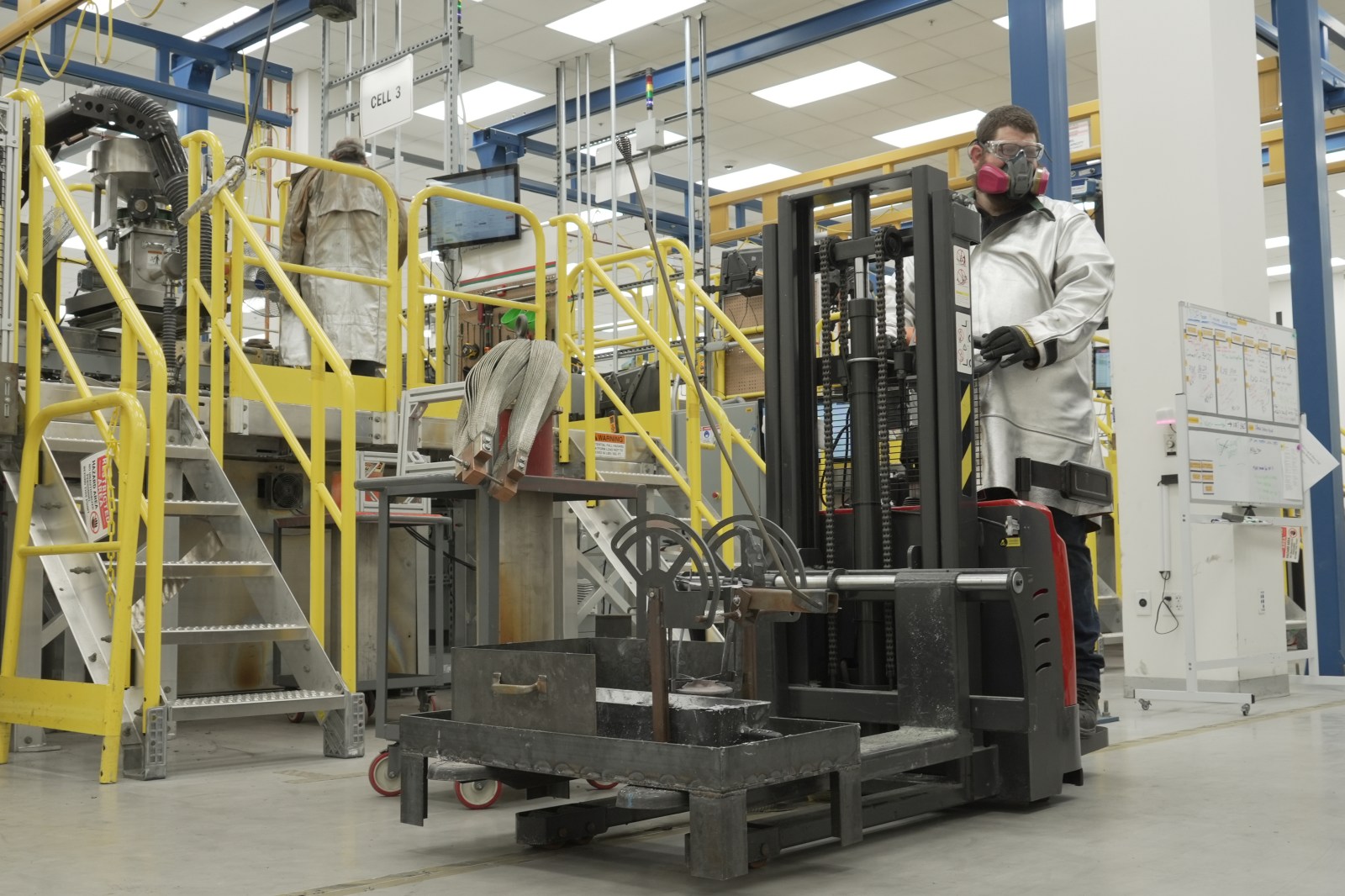
A new challenge is emerging for the United States as it seeks to develop advanced weaponry without relying on China’s rare earth magnets, according to a report from New Hampshire. The issue has gained national attention after a warehouse in Exeter, New Hampshire, revealed the critical role of rare earth elements in military technology. These elements, found in mining waste stored in 1-ton bags, are essential for manufacturing components like magnets used in weapons systems. The company involved in the process uses electrolysis to extract these elements, highlighting the strategic importance of securing a stable supply chain for defense purposes. This development comes as the U.S. government under President Donald Trump continues to emphasize reducing dependence on foreign sources, particularly China, for key materials (winnipegfreepress.com).
The situation is further complicated by broader trade policies that have shaped the U.S. manufacturing landscape. The Jones Act, a 100-year-old law that restricts the use of foreign-built ships in domestic trade, has been criticized for limiting the production of U.S.-built cargo ships. With China constructing over 4,000 vessels annually, the U.S. now produces just a handful, raising concerns about national security and economic competitiveness. President Trump and Congress have been urged to reconsider the law, which is seen as a barrier to modernizing the maritime industry and ensuring supply chain resilience (nypost.com).
While these developments focus on trade and defense, other reports highlight diplomatic tensions, such as Israel’s concerns over a Gaza plan endorsed by President Trump. However, these issues are distinct from the core topic of rare earth elements and U.S. manufacturing strategy. The ongoing push to diversify supply chains and reduce reliance on China remains a central theme in current U.S. policy discussions.