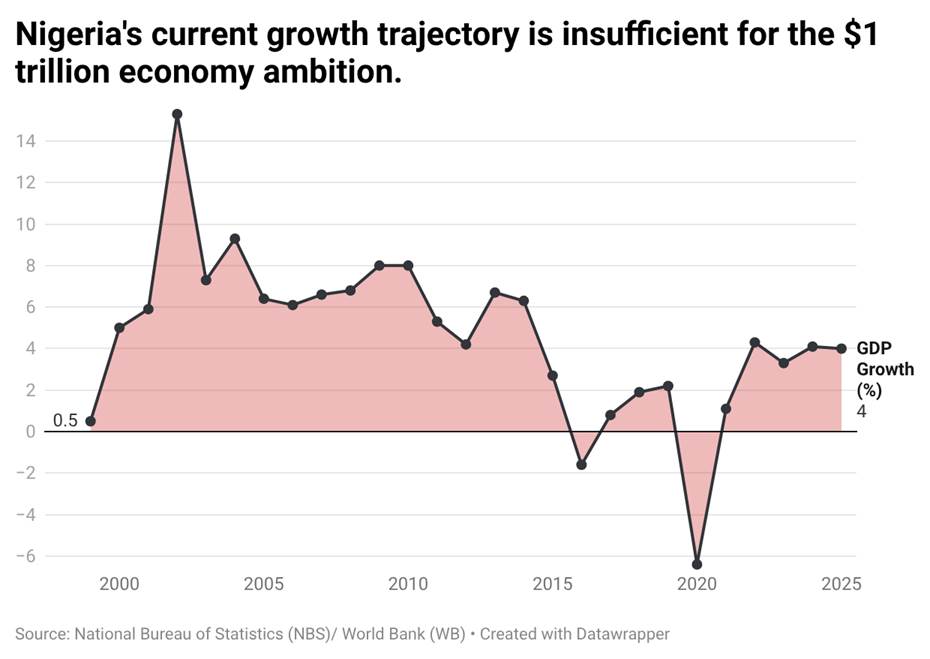
Nigeria, whose economy is projected to reach $1 trillion by 2030, is encountering significant hurdles in achieving its growth targets. According to a recent analysis, the country’s ambition is being challenged not only by governance issues but also by broader structural and economic constraints. The report highlights that while improved corporate governance is essential, it alone is insufficient to drive the necessary economic expansion.
The Nigerian government has set ambitious goals to transform the economy into one of the largest in Africa, but experts warn that progress remains slow. Factors such as infrastructure gaps, bureaucratic inefficiencies, and limited access to credit are cited as major obstacles. These challenges are compounded by global economic uncertainties, including inflation and fluctuating oil prices, which have long been a key driver of Nigeria’s economy.
Despite these difficulties, there are ongoing efforts to attract foreign investment and diversify the economy beyond oil. However, the pace of reform and implementation remains a critical concern. The country’s ability to meet its $1 trillion target will depend on how effectively it addresses these structural issues. (businessday.ng)