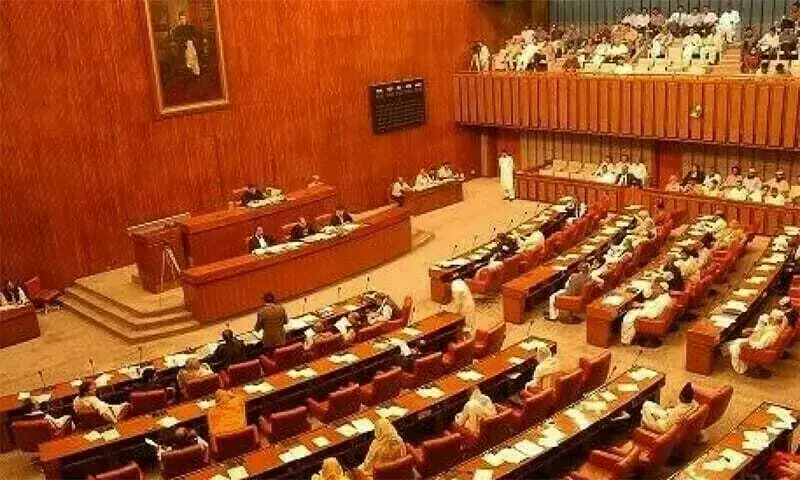
Pakistan’s Senate saw an increase in legislative output during 2025-26, according to the Pakistan Institute of Legislative Development and Transparency (Pildat). The report noted that 97 bills were passed, while only six ordinances were laid in the upper house. Despite this progress, institutional weaknesses persisted, including declining attendance and delayed representation from Khyber Pakhtunkhwa. The report also raised concerns about the pace and depth of constitutional amendments (dawn.com).
Meanwhile, in the U.S., Senator Lindsey Graham’s efforts to curb Russia’s war machine gained momentum as the Senate moved forward with sanctions targeting Russia and Iran. The proposed package includes tariffs up to 500% on Russian imports and 100% on countries purchasing Russian energy, such as China and India. This move reflects a broader strategy to weaken Russia’s economic and military capabilities (foxnews.com).
The two developments highlight contrasting legislative trends: one focused on internal institutional challenges, the other on international geopolitical strategy. Both underscore the Senate’s role in shaping national policy, albeit in different contexts.