President Donald Trump expressed support for a united Ireland during his visit to Dublin, sparking protests from local activists who rejected his views. Speaking to reporters in the Irish capital, Trump described a unified Ireland as a "fantastic thing" and suggested it could happen "now" rather than waiting. His comments came during a meeting with Irish Taoiseach Micheál Martin and President Catherine Connolly, as he prepared to travel to Doonbeg for further engagements.
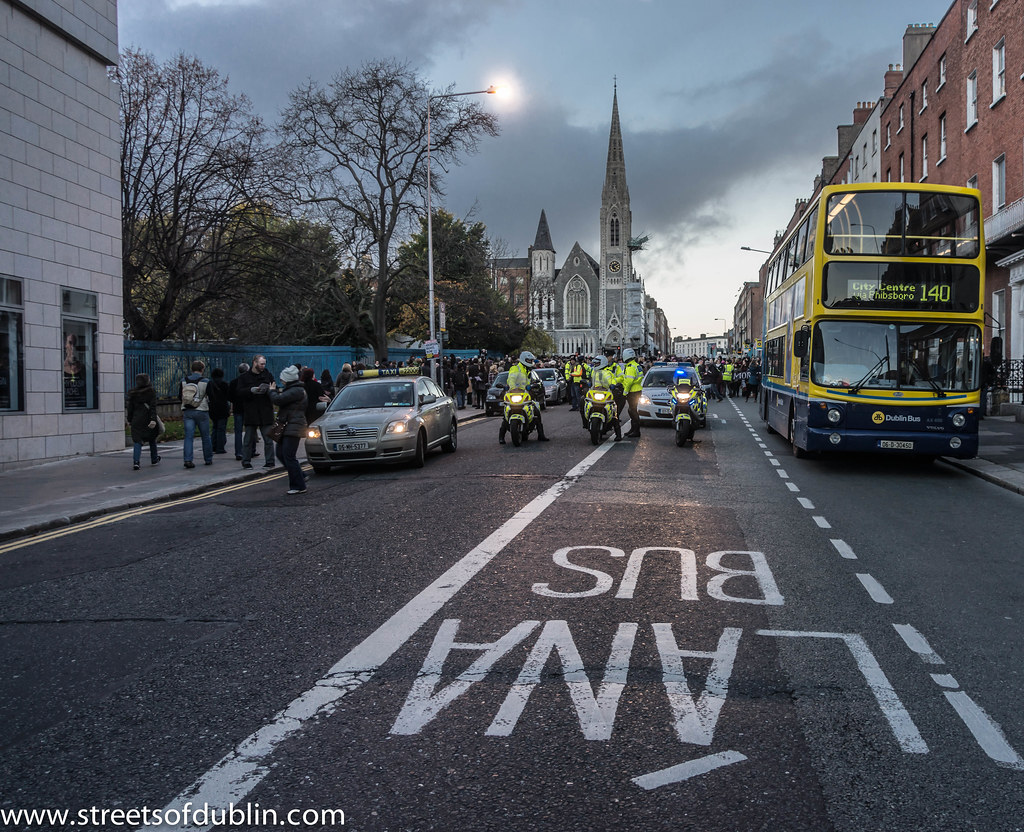
Meanwhile, demonstrators gathered in Dublin’s Garden of Remembrance, marching through Parnell Square to voice their opposition. Protesters, some wearing red scarves, called Trump the "Orange One," a reference to the Orange Order associated with unionist politics. They emphasized their belief that the United States should not interfere in Irish internal affairs. The protest, described as steady and determined, aimed to highlight the complexity of the Irish border issue and the potential consequences of political statements from foreign leaders.
The visit has drawn attention to the delicate balance of Irish politics, with some fearing that Trump’s remarks could influence public opinion or international perceptions of the country’s sovereignty. As the protests unfolded, the Irish government maintained a measured response, focusing on diplomatic engagement rather than direct confrontation. The situation underscores the ongoing tensions between Irish nationalism and international political figures.